
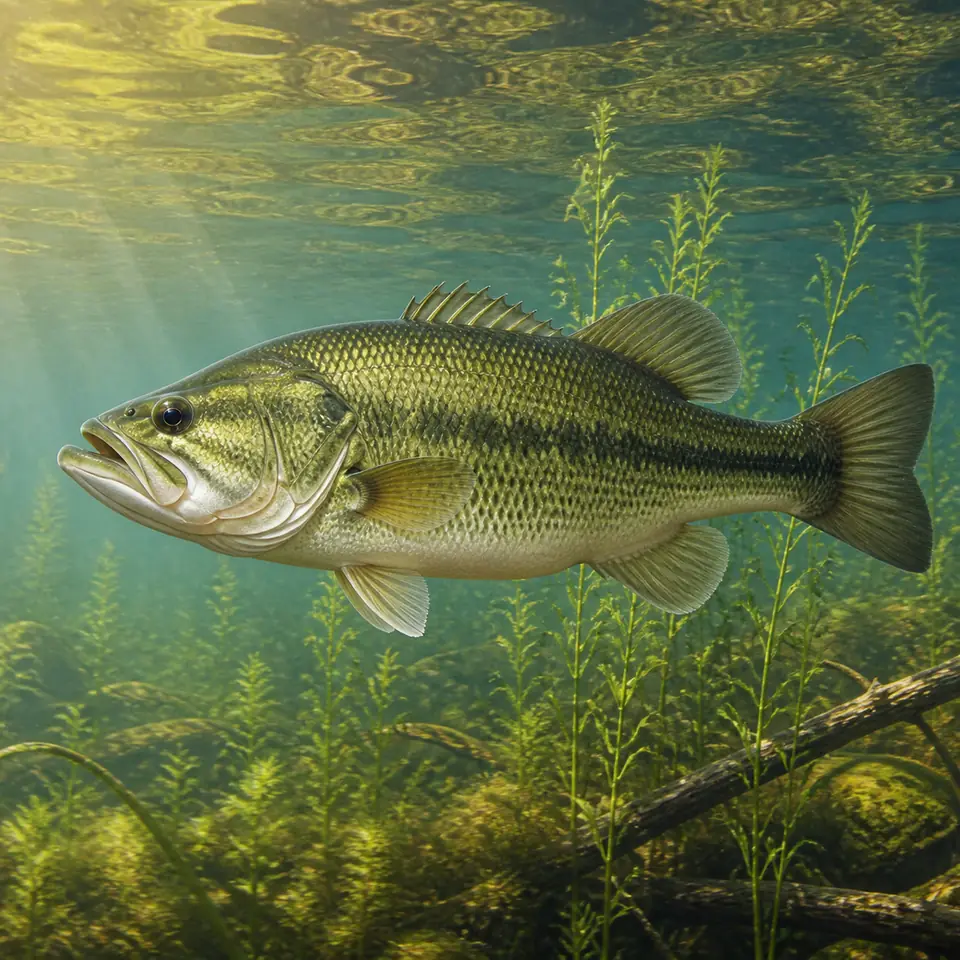
Start with the photo tool
Upload a clear freshwater fish photo to get a likely species, visible clues, possible lookalikes, and a practical next step. The result is a research starting point, not a certification.
1 · Start with the photo
How to identify a freshwater fish from a photo
The fastest route is to begin with the photo rather than a guessed name. Open the Fish Identifier tool, upload one image, and keep the result beside the visible evidence it describes. If the photo contains a full side profile, clear fins, and enough color or pattern detail, the tool can make a more useful likely match.
Add context when you have it: river, lake, pond, stream, aquarium, region, or whether the fish was observed underwater. Context can help separate fish with similar shapes, but it should not override what is visible in the image. A location hint is supporting evidence, not proof of a local species record.
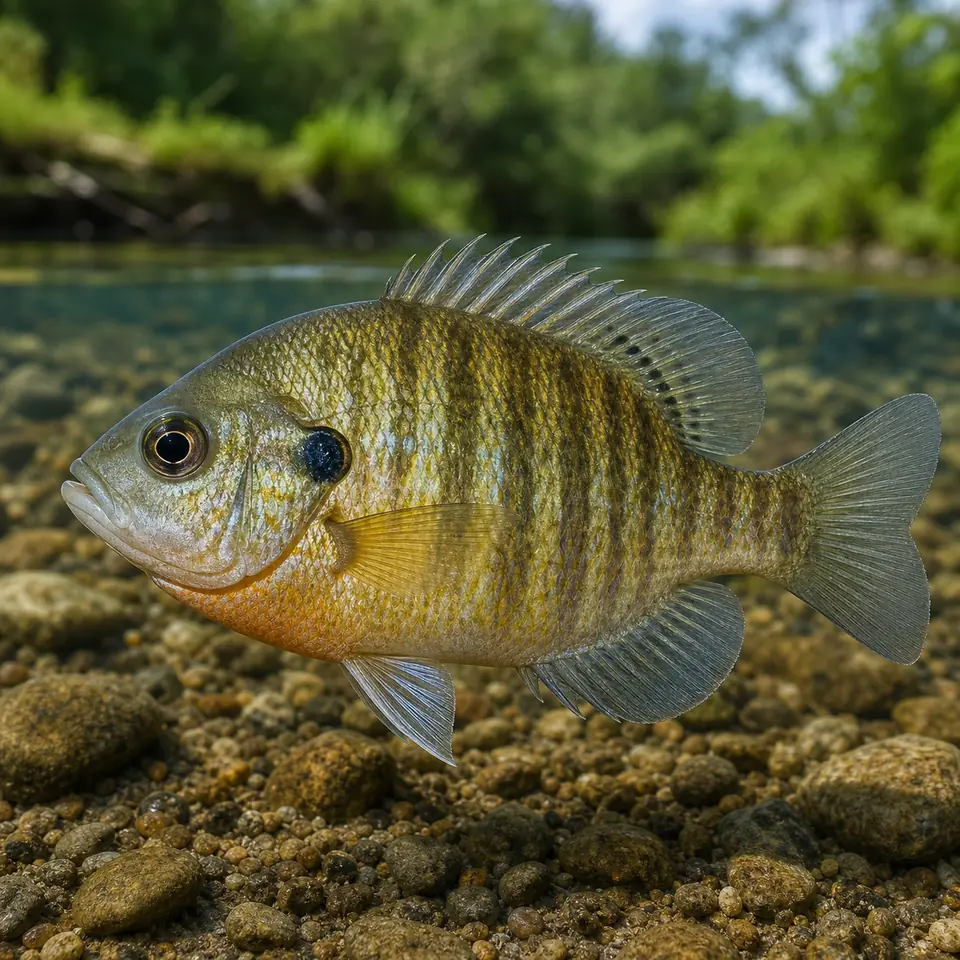
2 · Read the visible evidence
Visual clues that narrow the match
No single feature is enough for every fish. The strongest freshwater fish identification combines several small observations and then checks whether the result makes sense for the scene. Use the table as a practical checklist when reviewing your photo or a suggested match.
| Clue | What to inspect | Why it helps |
|---|---|---|
| Body shape | Long and narrow, deep-bodied, compressed, or bottom-oriented | Separates broad fish groups before you compare species names. |
| Fins and tail | Dorsal spines, fin placement, tail fork, and fin length | Fin structure often remains useful even when colors shift with lighting. |
| Mouth and head | Mouth position, jaw size, barbels, snout, and eye placement | Head shape can distinguish surface feeders, predators, and bottom-feeding fish. |
| Markings | Lateral stripe, spots, bars, patches, and color boundaries | Patterns can narrow lookalikes, but glare and water color can distort them. |
| Scene context | Clear water, vegetation, rocks, pond edge, or tank setting | Habitat adds context without replacing a visible anatomical clue. |
3 · Compare groups before species
Freshwater fish groups to compare
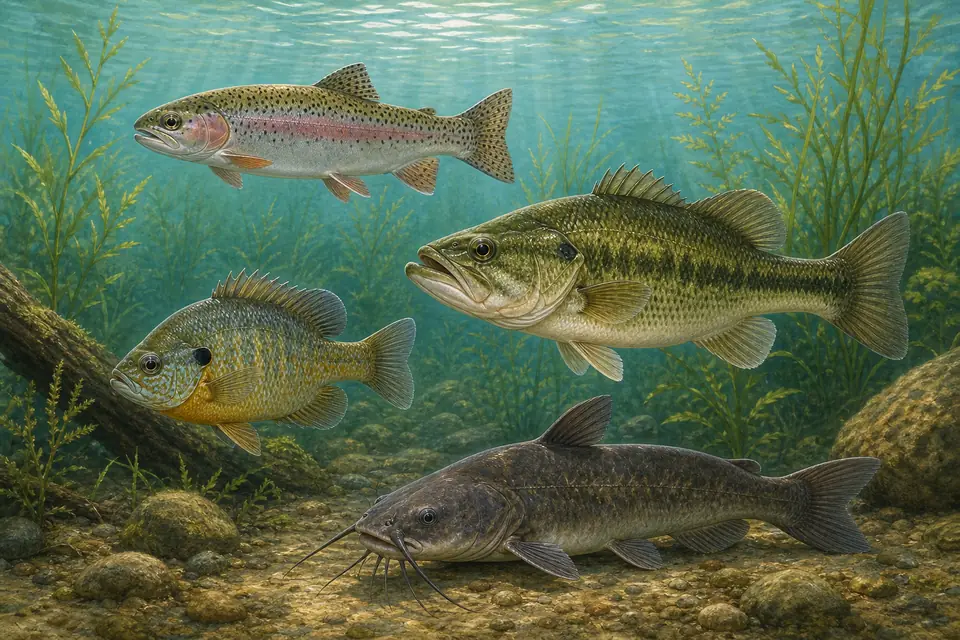
A practical freshwater fish species identification workflow usually works from broad group to likely species. Start by asking what the fish looks built to do, then compare the details that separate similar candidates. The groups below are examples for orientation, not a complete fish chart.
Compare the saltwater fish guide
Bass and sunfish
Look for a deep body, a continuous-looking dorsal area, a strong mouth or jaw profile, and bars or dark lateral markings. Similar sunfish can share the same general silhouette.
Trout-like fish
A streamlined body, spotted back, forked tail, and a visible side stripe may be useful clues. Water clarity and reflections can make spots appear stronger or weaker than they are.
Catfish and bottom fish
Barbels, a broad head, a low swimming position, and a less forked or more rounded tail can point toward bottom-oriented fish groups.
Carp and pond fish
A robust body, small mouth, scale pattern, and sometimes barbels can help separate carp-like fish from goldfish or other pond lookalikes.
4 · Improve the evidence
How to take a better freshwater fish identification photo
If the first result is broad or uncertain, a better photo is usually more helpful than a longer guess. Keep the fish in focus, avoid strong glass or surface reflections, and show the entire body when it is safe and practical to do so.
For a caught fish, follow local handling and release rules. For an aquarium fish, reduce glare and photograph from the side of the tank. For an underwater observation, take several frames rather than relying on one dark or partially hidden image.
- Use even light and tap to focus on the fish, not the water surface.
- Keep the eye, mouth, dorsal fin, tail, and main markings visible.
- Avoid cropping away the head or tail; silhouette matters.
- Take a second photo from a slightly different angle if the fins are hidden.
- Record the water type and broad location separately from the image.
5 · Know the boundary
What a photo can and cannot confirm
A freshwater fish identifier can help you decide what to research next. It cannot turn a single image into a laboratory record. Close lookalikes, juvenile fish, unusual color forms, poor lighting, and incomplete views can all lower confidence.
Do not use a photo-only result to decide whether a fish is safe to eat, protected, invasive, legal to keep, or subject to a catch limit. Those decisions depend on current local rules and authoritative identification. For species records or scientific names, verify the candidate in a trusted database such as FishBase and, when the decision matters, ask a local fisheries or natural-history authority.
Freshwater fish identifier FAQ
Questions about freshwater fish identification
Direct answers for river, lake, pond, stream, and aquarium photos.
Can I identify a freshwater fish from a photo?
Often you can get a likely group or species candidate when the photo is clear and shows the body, fins, head, and markings. Treat the result as a starting point, especially when several species look alike.
What kind of photo works best for freshwater fish identification?
A sharp side view with even light is usually the most useful. Keep the full body, eye, mouth, dorsal fin, tail, and visible pattern in frame, and take a second angle if a fin is hidden.
Can it identify fish from a river, lake, pond, or aquarium?
The tool can consider common freshwater and pond contexts, including aquarium photos when the fish is visible. Context helps narrow the candidates but does not prove a species or location record.
Is freshwater fish identification the same as a fish species chart?
No. A chart is a reference organized around known features or species, while a photo identifier suggests likely matches from an image. The two work well together: use the photo result to choose candidates, then verify them in a trusted reference.
Can a photo tell me if a freshwater fish is safe to eat?
No. Identification does not confirm contamination, toxins, local advisories, legal limits, or safe preparation. Check current local guidance and ask a qualified authority before making a food-safety decision.
What should I do if the result is uncertain?
Take a clearer side photo, include the fins and head, note the broad habitat and location, and compare the candidate with a trusted field guide or database. Do not force a precise species name when the visual evidence is weak.
Summary
The practical freshwater fish identifier workflow
Start with one clear photo, inspect the visible evidence, compare the broad fish group, and then verify the likely species with a reliable reference. This approach answers the question “what fish is this?” without pretending that every image supports a certain answer.
When you are ready, use Fish Identifier to upload a freshwater fish photo and review the likely species, clues, lookalikes, and next step in one place.
Identify a Freshwater FishReference
FishBase — a global fish species database — Use a trusted species database to verify a candidate name and taxonomic context after a photo-based suggestion.