
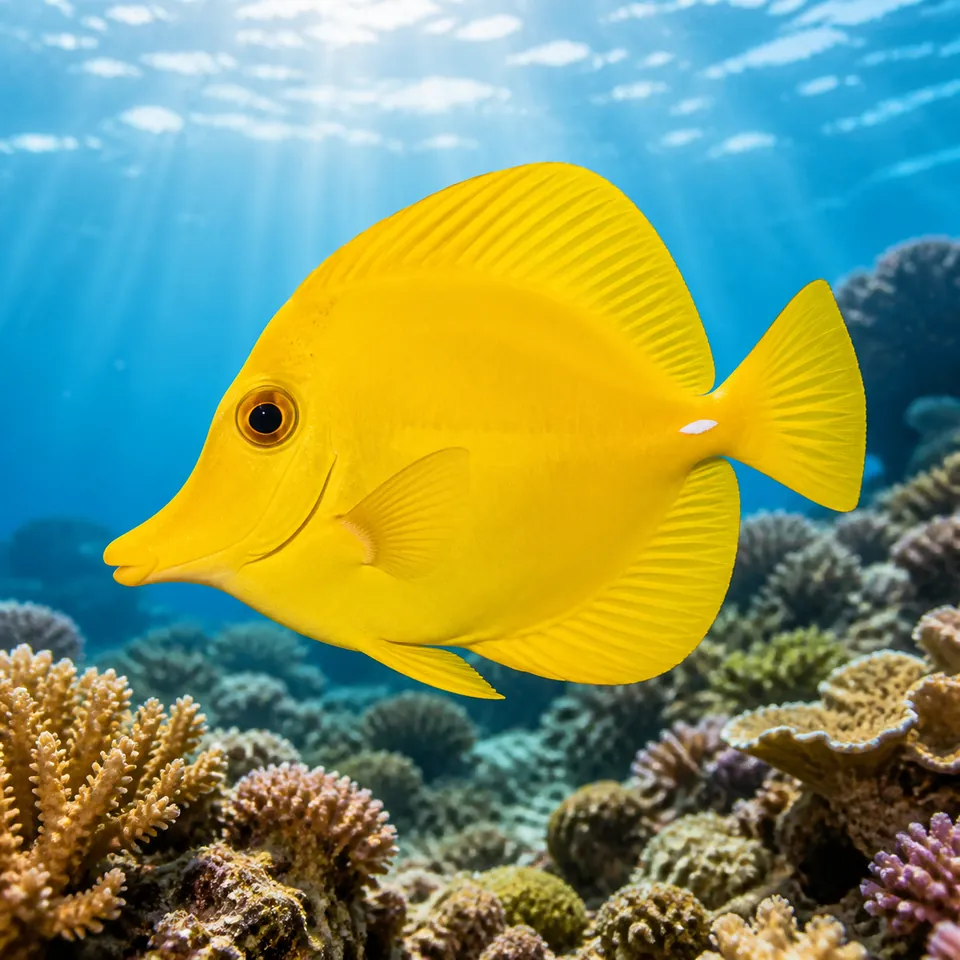
Start with the photo tool
Upload a clear saltwater fish photo to get a likely species, visible clues, possible lookalikes, and a practical next step. The result is a research starting point, not a certification or a safety decision.
1 · Start with the photo
How to identify a saltwater fish from a photo
The fastest route is to begin with the image rather than a guessed name. Open the Fish Identifier tool, upload one clear marine fish photo, and compare the suggested match with the evidence that is actually visible. A full side profile, readable fins, and enough color or pattern detail usually produce a more useful starting point than a distant or heavily cropped frame.
Add context when you have it: coral reef, coastal shoreline, open water, tide pool, harbor, or saltwater aquarium. A broad location can help separate lookalikes, but context should support the anatomy instead of replacing it. A fish seen in a tropical reef setting is not automatically a reef species, and an aquarium label is not proof that the photo result is correct.
2 · Read the visible evidence
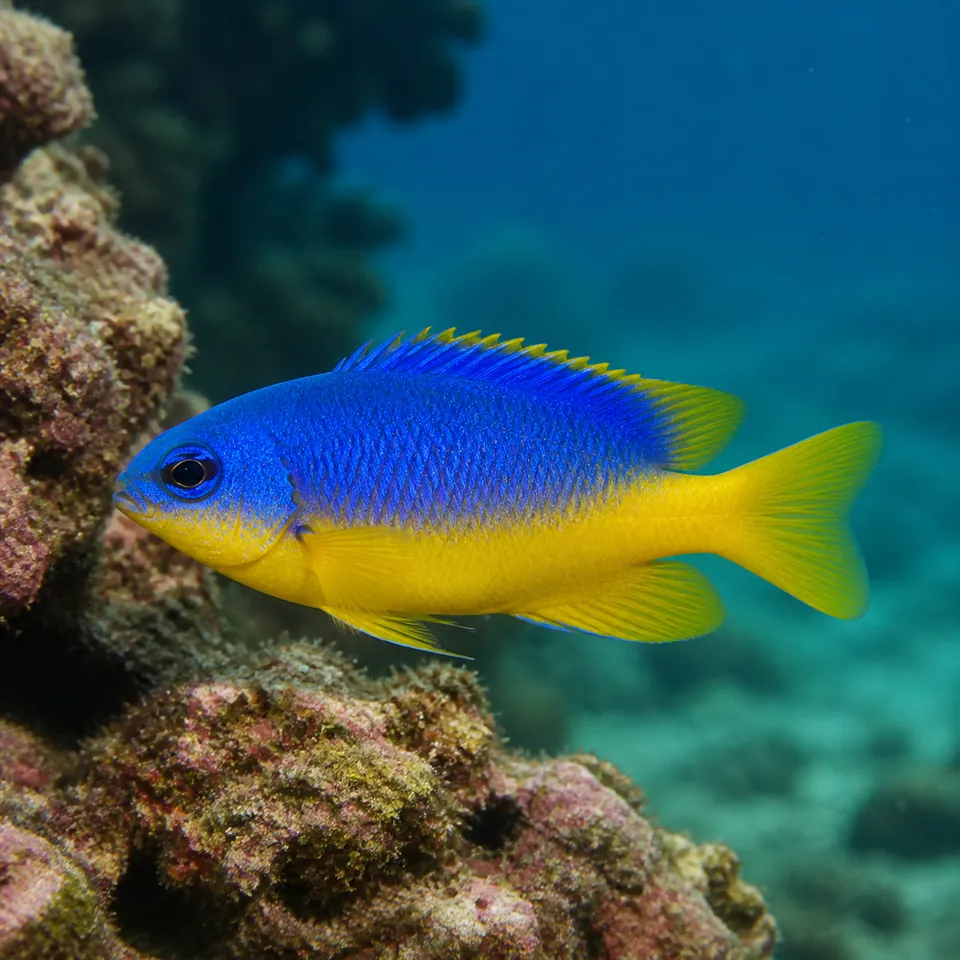
Visual clues that narrow a saltwater fish identification
No single feature works for every marine fish. A better workflow combines several observations, then asks whether the suggested species makes sense for the scene. Use the checklist below when reviewing your photo or comparing a likely match with a field guide.
Color is helpful but easy to distort underwater. Blue water, flash, reflection, depth, and aquarium lighting can shift the apparent shade, so give more weight to stable structures such as fin placement, body depth, tail shape, mouth profile, and the boundary between color bands.
| Clue | What to inspect | Why it helps |
|---|---|---|
| Body shape | Long and narrow, deep-bodied, compressed, bottom-oriented, or disk-shaped | Separates broad marine fish groups before you compare species names. |
| Dorsal and tail fins | Spines, fin height, tail fork, tail markings, and fin placement | Fin structure can remain useful when underwater color is distorted. |
| Mouth and head | Snout length, jaw position, teeth, beak-like shape, and eye placement | Head shape can distinguish grazers, predators, bottom feeders, and reef specialists. |
| Bands and markings | Bars, spots, stripes, patches, eye lines, and color boundaries | Patterns narrow lookalikes, but juvenile colors and light can change their appearance. |
| Habitat context | Coral, sand, seagrass, open blue water, or aquarium setting | Context supports a visible clue without becoming proof by itself. |
3 · Compare groups before species
Saltwater fish groups to compare
A practical marine fish identification workflow usually moves from a broad group to a likely species. Ask what the fish looks built to do, where it is swimming, and which structural details separate the closest candidates. The examples below are orientation points, not a complete saltwater fish chart.
If your photo shows a fish from a river, lake, pond, or freshwater aquarium instead, use the freshwater guide for a closer starting point. The same photo habits still help, but the likely groups and lookalikes change with the water type.
Compare the freshwater fish guide
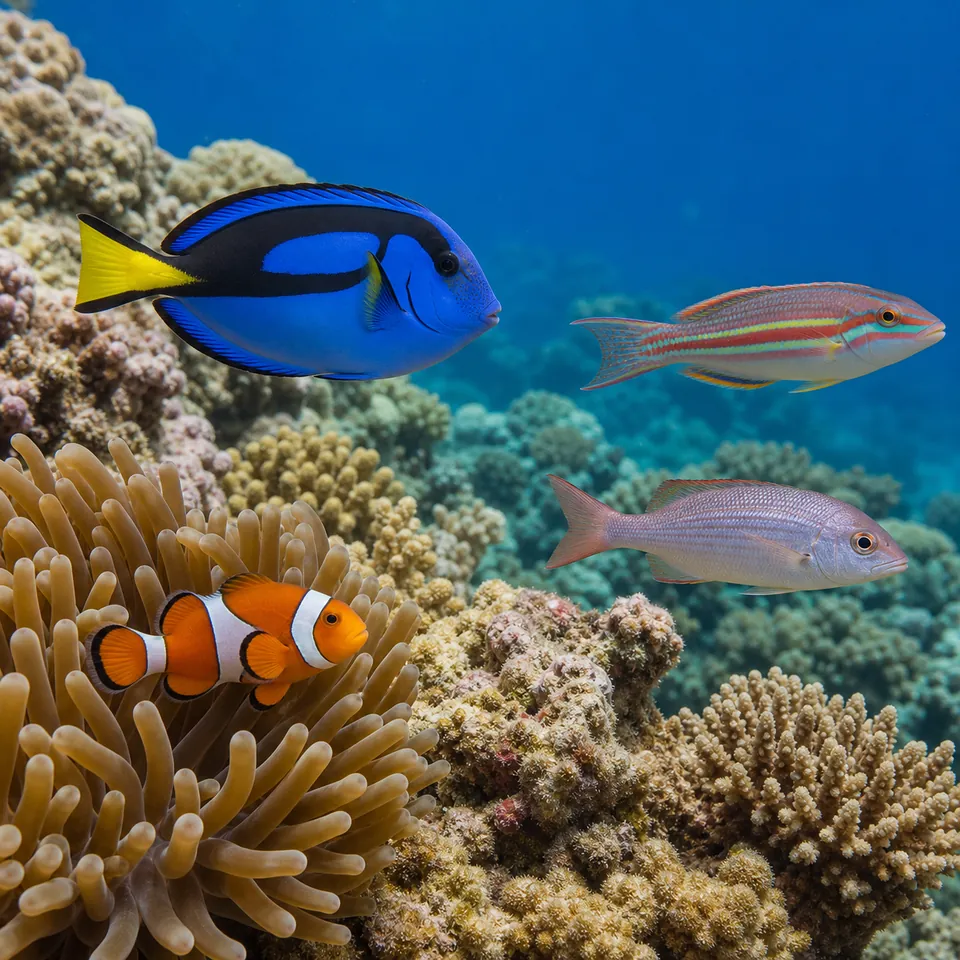
Tangs and surgeonfish
Look for a laterally compressed body, a tall dorsal fin, a small terminal mouth, and strong color blocks or bands. The tail and the position of a sharp-looking caudal spine can be useful, but do not handle a fish to inspect it.
Wrasses and reef swimmers
Many wrasses have an elongated body, a pointed snout, a continuous dorsal area, and vivid stripes or spots. Color can change with age and sex, so body profile and fin layout matter too.
Snappers and other predators
A more robust body, a sloping head, a larger mouth, and a forked tail may point toward a predatory group. Similar silhouettes occur across regions, so location and markings should be checked together.
Clownfish and damselfish
Small reef fish can have bold bands, compact bodies, and rounded or forked tails. A host anemone or coral setting adds context, but it does not by itself identify the exact species.
4 · Improve the evidence
How to take a better saltwater fish identification photo
When the first result is broad or uncertain, a better image is usually more valuable than a longer guess. Keep the fish in focus, reduce reflections, and show the whole body when it is safe and practical. If you are diving or snorkeling, do not put yourself or the animal at risk for a photograph.
For a caught fish, follow local handling, release, and fishing rules. For an aquarium fish, photograph from the side of the tank and turn off harsh reflections where possible. For an underwater observation, several clear frames from different angles can show a hidden fin or marking that one dark image misses.
- Use even light and focus on the fish rather than bubbles, glass, or the water surface.
- Keep the eye, mouth, dorsal fin, tail, and main bands or spots inside the frame.
- Avoid cropping away the head or tail; the silhouette is part of the evidence.
- Take a second side or three-quarter photo if a fin is hidden.
- Record the broad habitat and location separately from the image.
- Do not touch a venomous, spiny, protected, or unfamiliar fish just to improve a photo.
5 · Know the boundary
What a saltwater fish photo can and cannot confirm
A saltwater fish identifier can help you decide what to research next. It cannot turn one image into a verified taxonomic record. Close lookalikes, juvenile fish, unusual color forms, poor visibility, reflections, and partial views can all lower confidence.
Do not use a photo-only result to decide whether a fish is safe to eat, venomous, protected, invasive, legal to keep, or subject to a local catch limit. Those decisions depend on current local rules and authoritative identification. For a scientific name or species record, compare the candidate with a trusted database such as FishBase and ask a local fisheries or natural-history authority when the decision matters.
Saltwater fish identifier FAQ
Questions about saltwater fish identification
Direct answers for reef, shoreline, boat, tide-pool, underwater, and marine aquarium photos.
Can I identify a saltwater fish from a photo?
Often you can get a likely group or species candidate when the image is sharp and shows the body, fins, head, and markings. Treat the result as a starting point, especially when several marine fish look alike.
What photo works best for saltwater fish identification?
A clear side view with even light is usually the most useful. Keep the full body, eye, mouth, dorsal fin, tail, and color pattern in frame, and take a second angle if a fin is hidden.
Can it identify reef fish, shore fish, and aquarium fish?
The guide and photo tool can help with common marine and reef contexts when the fish is visible. Habitat helps narrow candidates but does not prove a species or regional record.
Is a saltwater fish identifier the same as a fish identification chart?
No. A chart is a reference organized around known features or species, while a photo identifier suggests likely matches from an image. They work well together: use the photo result to choose candidates, then verify them in a trusted reference.
Can a photo tell me whether a saltwater fish is safe to eat?
No. Identification does not confirm toxins, contamination, ciguatera risk, local advisories, legal limits, or safe preparation. Check current local guidance and ask a qualified authority before making a food-safety decision.
What should I do if the marine fish result is uncertain?
Take a clearer side photo, include the fins and head, note the broad habitat and location, and compare the candidate with a trusted field guide or database. Do not force a precise species name when the visual evidence is weak.
Summary
The practical saltwater fish identification workflow
Start with one clear marine fish photo, inspect the visible evidence, compare the broad fish group, and then verify the likely species with a reliable reference. This approach answers “what fish is this?” without pretending that every underwater image supports a certain answer.
When you are ready, use Fish Identifier to upload a saltwater fish photo and review the likely species, clues, lookalikes, and next step in one place.
Identify a Saltwater FishReference resources
FishBase — global fish species database — Use a trusted species database to verify a candidate name and taxonomic context after a photo-based suggestion.
Florida Fish and Wildlife — reef fish identification — A public reference for comparing reef fish features and regional identification guidance.
NOAA Fisheries — marine resources — Check official marine species, conservation, and fisheries information when a decision depends on current rules or status.